
Lenskart
Product Design — UI/UX
March 2022
Challenge
For Lenskart, we explored a mobile-first redesign through an omni-channel lens, grounded in a clear hypothesis: eyewear for Gen Z in Asia is evolving from medical necessity to fashion accessory — much like shoes. Glasses are increasingly style-led, occasion-based, and high-repeat purchases. However, existing digital journeys still reflect prescription-first logic and utility-driven catalogs, creating friction in moments that should feel expressive and effortless.
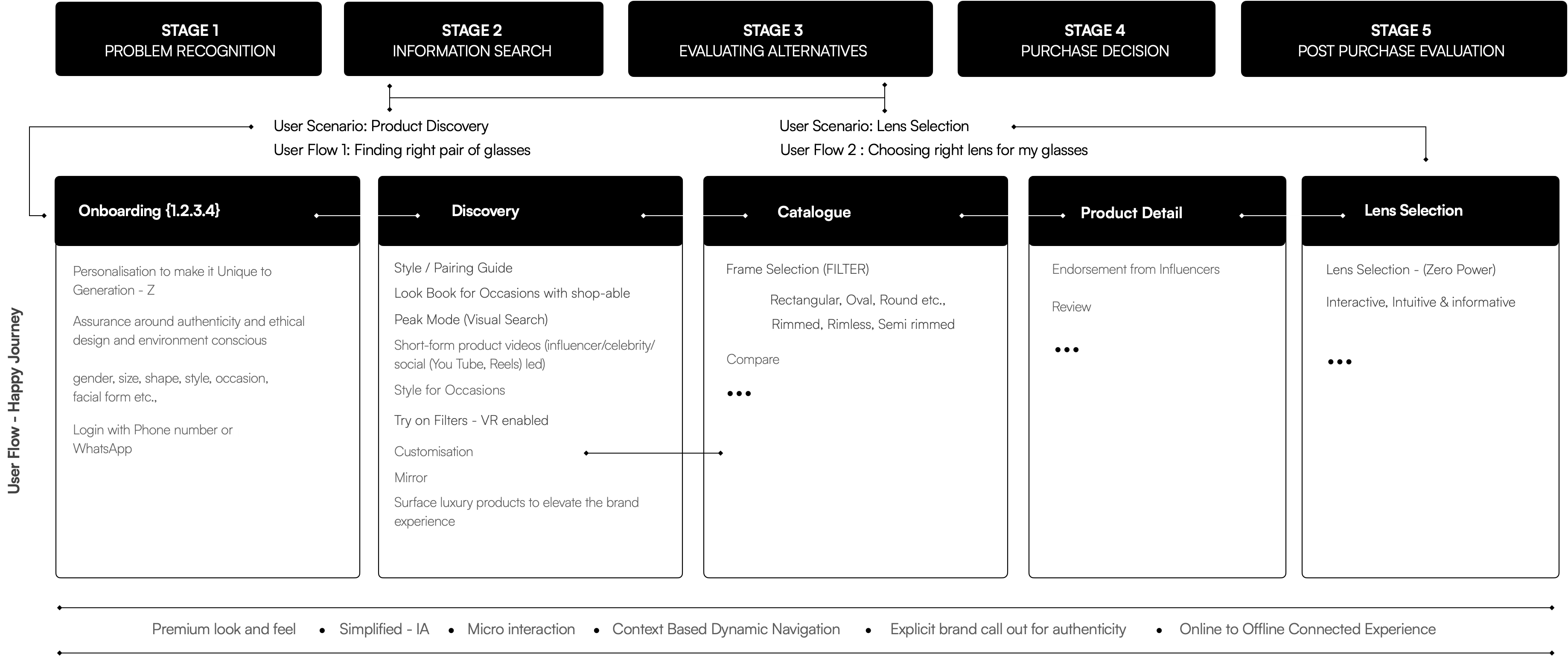
The primary challenge was to simplify two critical experiences: product discovery and lens selection. Finding the right pair felt overwhelming, while choosing lenses felt technical and intimidating — especially for zero-power users. The experience mirrored internal categories rather than user intent, resulting in cognitive load and drop-offs.
Our design vision was to reframe eyewear as a mobile-native accessory behaviour: shift from filters to vibe-based discovery, from configuration to guided clarity. By focusing purely on discovery and lens selection (excluding prescription and payment flows), we aimed to create a seamless, confidence-driven journey that aligns with Gen Z expectations — fast, expressive, and fashion-forward.
Solution
The solution proposed, promoting a diverse range of stylish eyewear options paired with different occasions and looks attached that encouraged frequent use beyond just medical needs.
Today’s young people differ from yesterday’s
Findings — the ‘behaviour’ of being individualistic with unique and unlimited ‘consumption’ patterns suggests that we need highly personalised products with customisation capability.
1940-59
1960-79
1980-94
1995-2010
The search of the truth is at the root of all Generation Z’s behaviour

Undefined ID
“Don’t define yourself in only one way”
Expressing individual truth

Communaholic
“Be radically inclusive”
Connecting through different truths

Dialoguer
“Have fewer confrontations and more dialogue”
Understanding different truth

Realistic
“Live life pragmatically”
Unveiling the truths behind all things
Six kinds of Generation Z consumers in APAC
Brand-conscious followers and premium shopaholics are the largest segment within Generation Z, across Australia, China, Indonesia, Japan, South Korea and Thailand.
Generation Z population by archetype, %
Findings — keeping the product authentic, transparent, ethical and environmentally conscious will enhance the value of trust amongst consumers.
Findings — brand integrity and a sophisticated customer experience is the key to winning in the APAC region. Requires an easy-to-compare provision.
Online buying behaviour and brand discovery
Findings — 56% have visited an online retail store and 32% have purchased a product in the last month; 41% have used their phone to pay for an item or service.
Online behaviours by device
% who did the following online last month via …
Mobile
PC / Laptop
Visited/used a social network
95%
76%
Used a chat or instant messaging service/app
92%
36%
Watched a video clip or visited a video-sharing site
91%
62%
Visited/used a search engine
90%
76%
Visited an online retail site or store such as Amazon
80%
56%
Used a map or directions service/app
76%
21%
Searched for a product or service you want to buy
73%
40%
Visited a news website/app/service
71%
40%
Uploaded/shared a photo
66%
25%
Purchased a product online
61%
32%
E-commerce by device
% who have purchased a product online via the following devices in the last month
Any device
72%
Mobile
61%
PC / Laptop
32%
Tablet
6%
Brand discovery
% who find out about new brands or products via the following
Ads seen online
36%
Search engines
34%
Ads seen on TV
33%
TV shows / films
29%
Word-of-mouth recommendation from friends or family
28%
Ads seen on mobile or tablet apps
28%
Recommendations / comments on social media
27%
Brand / product websites
25%
Ads seen before online videos or TV shows
22%
Consumer review sites
21%
Findings — influencer marketing and celebrity endorsements are bigger than ever. 70% of Gen Z YouTube subscribers stated they view YouTubers as more relatable than mainstream celebrities.
Is eyewear an accessory?
One of the key reasons why eyewear has become the “biggest fashion accessory of all time” is that “having lots of choice has made it fun again”.
The College of Optometrists states that 43% believe glasses make them look smarter, while 36% want to appear more professional — two out of five would wear frames to look fashionable at work. A study of 2,000 UK adults by Vision Express confirms that three in five would wear glasses for a business meeting, and over half for a job interview.
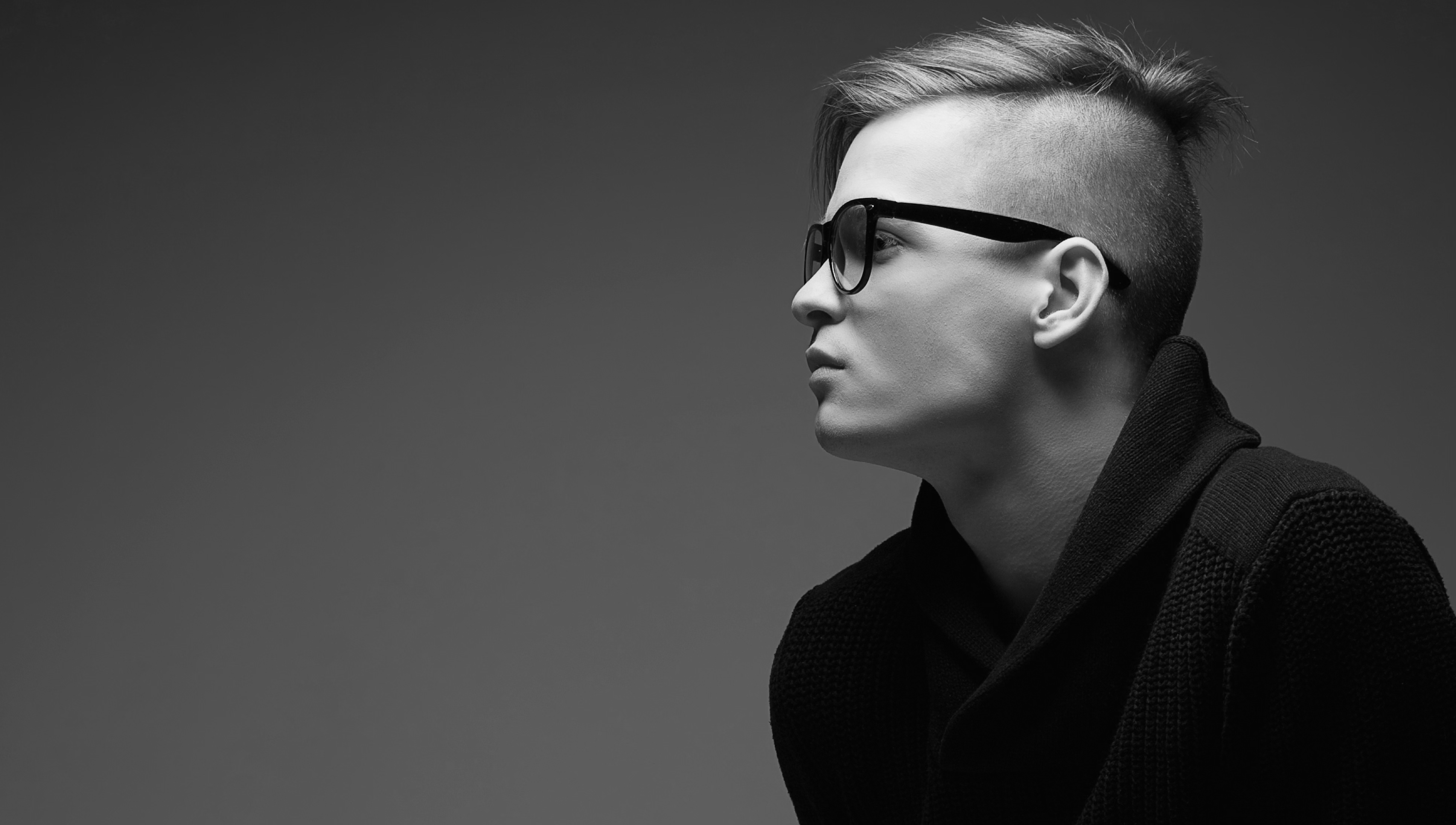
Findings — demand for occasion-led, fashionable eyewear will increase significantly. Designers Chanel, Gucci and Vera Wang, alongside several traditional manufacturers, have launched collections that merge fashion and function.
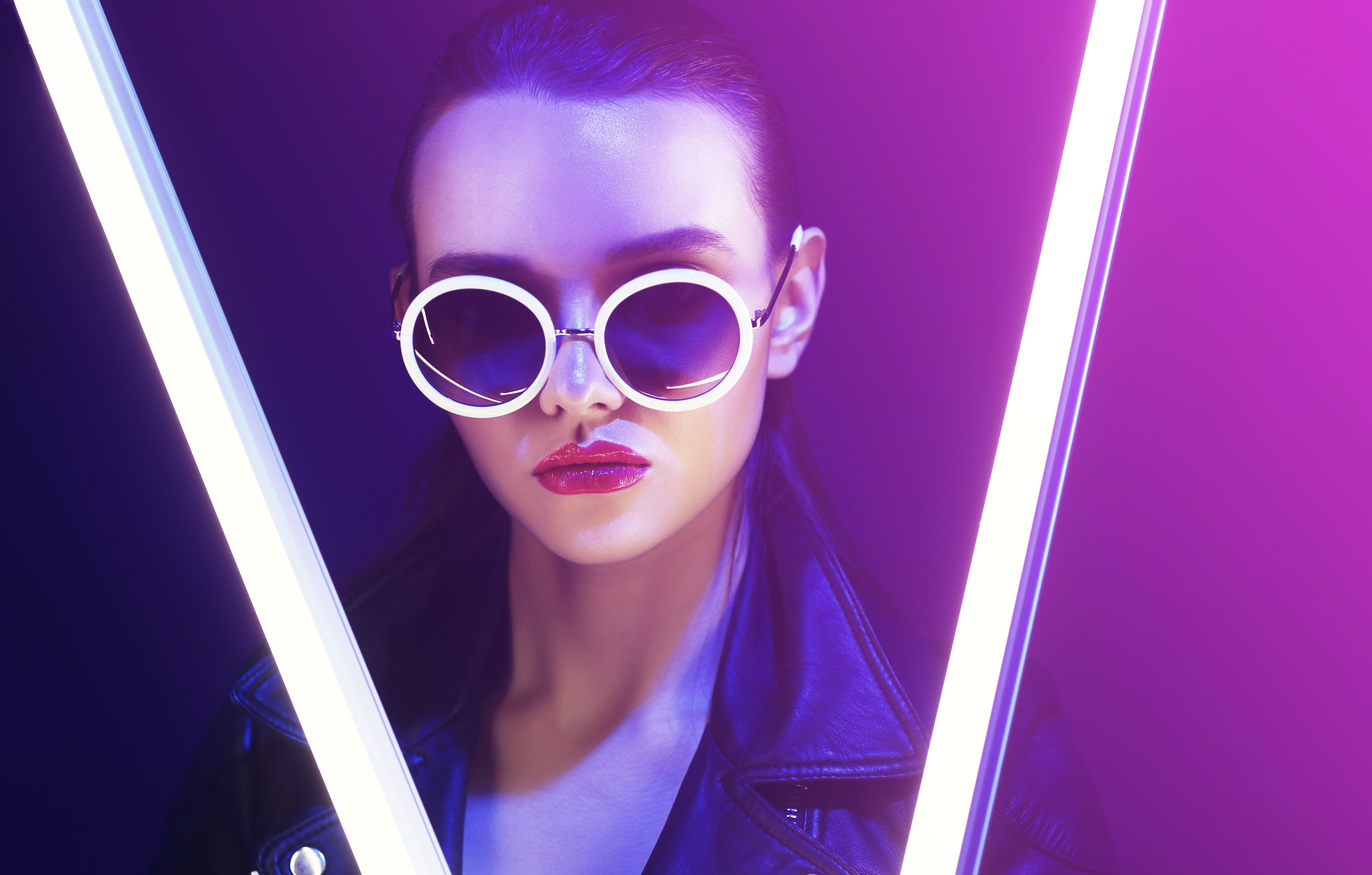
Findings — demand for luxury eyewear as a fashion accessory is set to reach a valuation of US$ 50 Bn through 2027, with multi-brand stores growing at a CAGR of 5.5%.
Consumer buying process
Outcome